A Myriad of Worlds at Your Fingertips: The Modern Transformation of Screen Printing Technology
I. From Millennia-Old Craftsmanship to Modern Precision Manufacturing
The modernization of screen printing began with breakthroughs in precision manufacturing technology. Once considered a "rough" process, it can now achieve fine printing down to the 0.1 mm level thanks to high-mesh screens (up to 500 mesh and above), computer-to-plate (CTP) technology, and nanoscale photosensitive emulsion. This leap in precision has transformed it from simple pattern reproduction into a high-precision process capable of microcircuit printing, laying the foundation for functional applications.
II. Cross-border Integration: Multi-dimensional Expansion of Technological Compatibility
The most notable feature of modern screen printing is its strong industry compatibility. In the electronics field, it is used to print flexible circuits and electrodes for foldable screens; in the medical field, biocompatible inks are screen-printed to create smart drug patches; in the new energy industry, it efficiently prints solar cell electrodes, driving down the cost of clean energy. This cross-domain adaptability makes it a common technology platform for innovation across multiple industries.
III.Green and Intelligent: Dual Trends in Process Evolution
Environmental protection and digitalization are leading a new direction for screen printing. The widespread adoption of water-based inks and UV curing technology has significantly reduced volatile organic compound emissions, while integrated technologies such as digital screen printing have enabled small-batch, personalized production. This evolution of "greening" and "intelligentization" not only improves the sustainability of the process but also responds to the urgent need for flexible production in modern manufacturing.
IV. Silent Penetration: The Industrial Significance of Technological Transformation
The modern transformation of screen printing is a silent yet profound industrial penetration. It doesn't pursue disruptive declarations, but rather continuously expands its application boundaries through improved precision and cross-industry adaptation. From cultural and creative industries to high-tech manufacturing, this ancient craft, with its unique media adaptability and cost advantages, has become an irreplaceable solution in many niche fields, demonstrating a classic paradigm of technological continuity and reinvention.
Conclusion.
The contemporary narrative of screen printing is an apocalypse about how the "ancient" and the "emerging" resonate harmoniously. It reminds us that true technological vitality often lies not in radical subversion, but in continuous evolution and open compatibility—in every subtle imprint connecting materials and functions, tradition and the future, millennia-old craftsmanship is quietly shaping the texture of the modern world. When we gaze at the objects around us that have been given form and function by screen printing, we are also witnessing a silent yet magnificent technological revival.
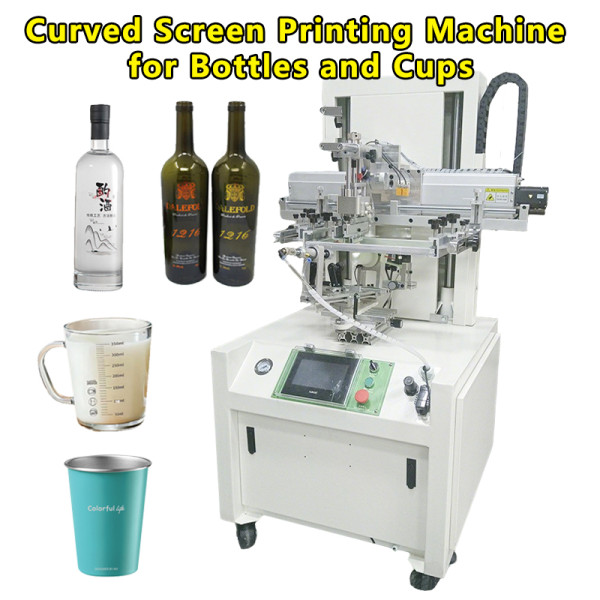
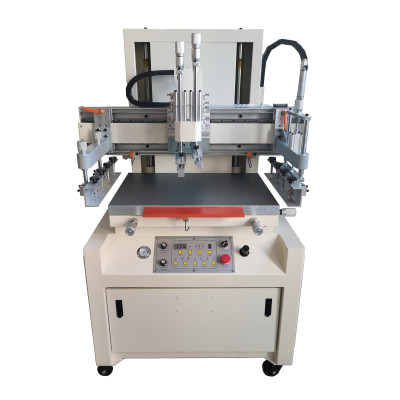
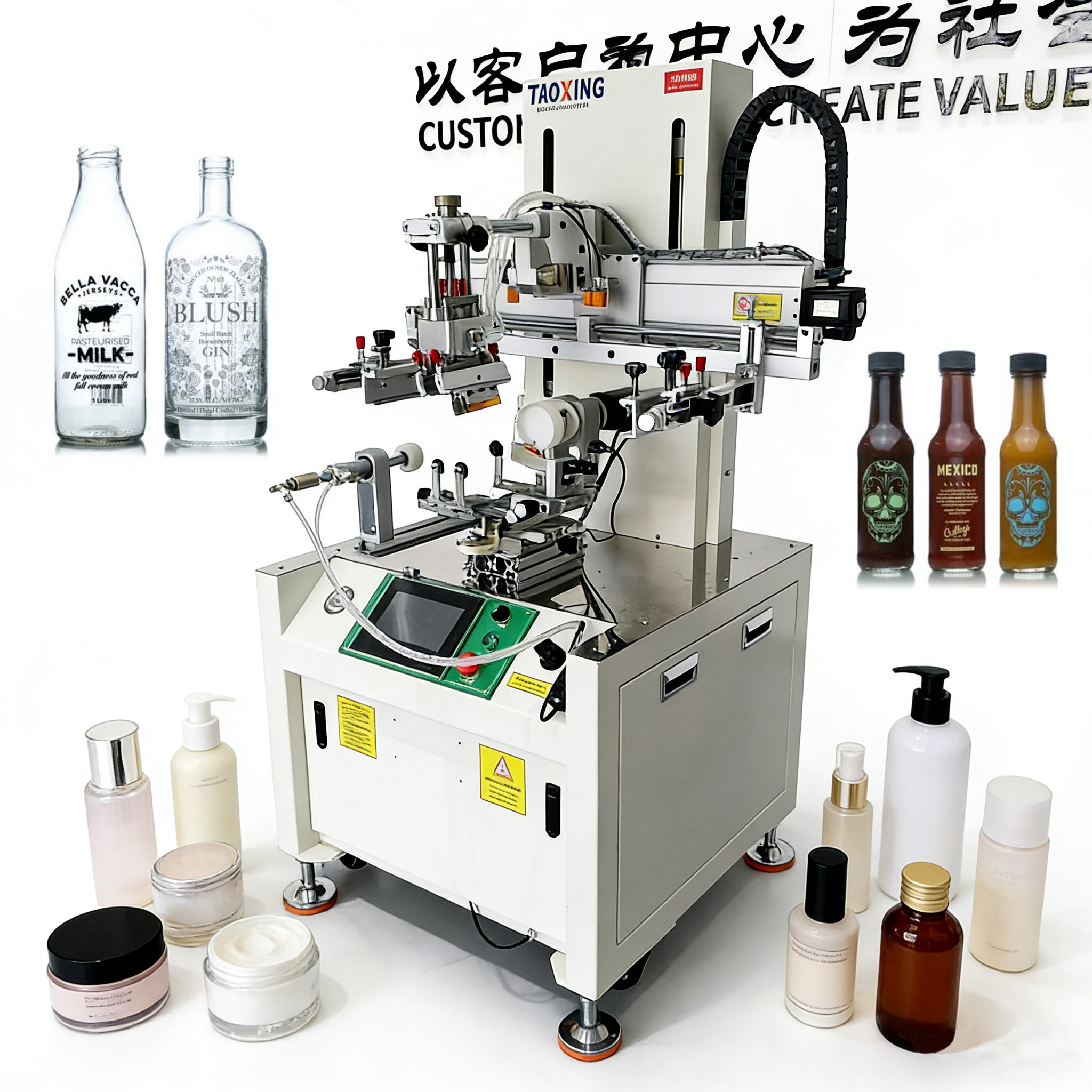
This servo curved screen printing machine is suitable for surface pattern printing of various round products.
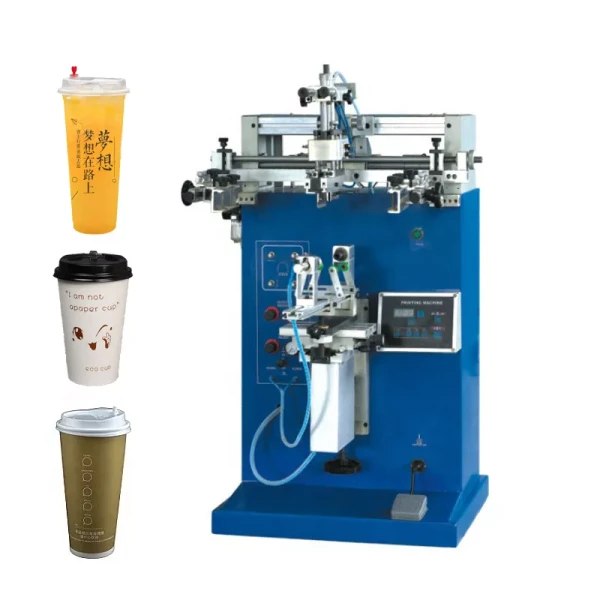
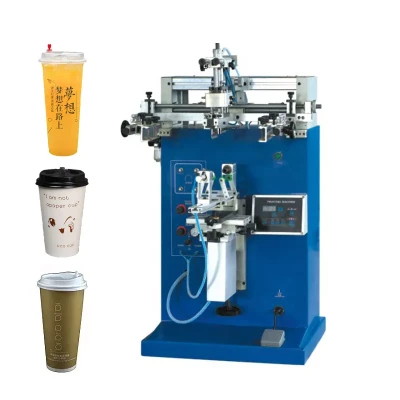
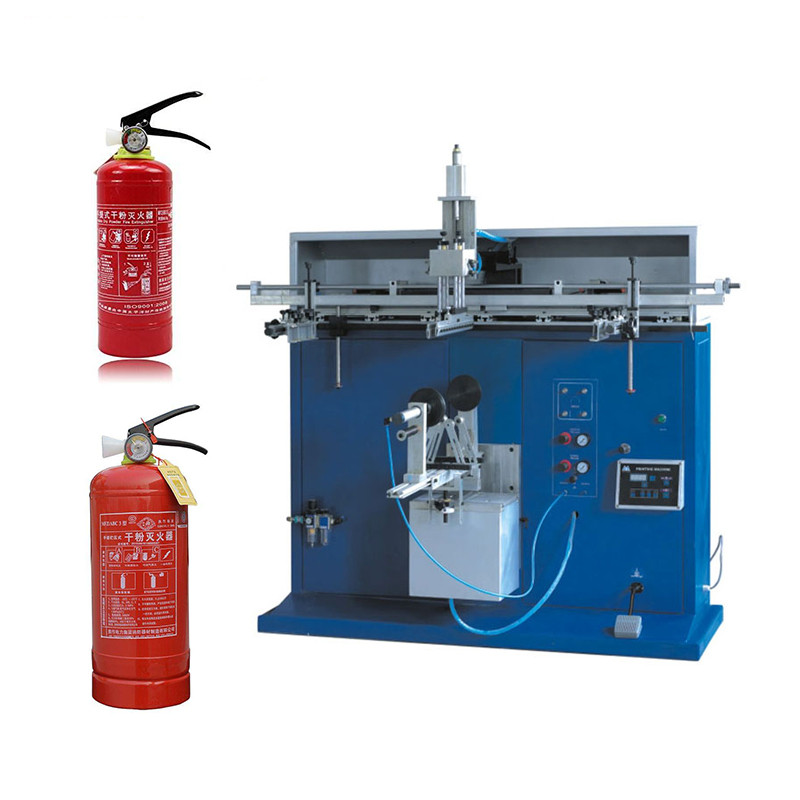
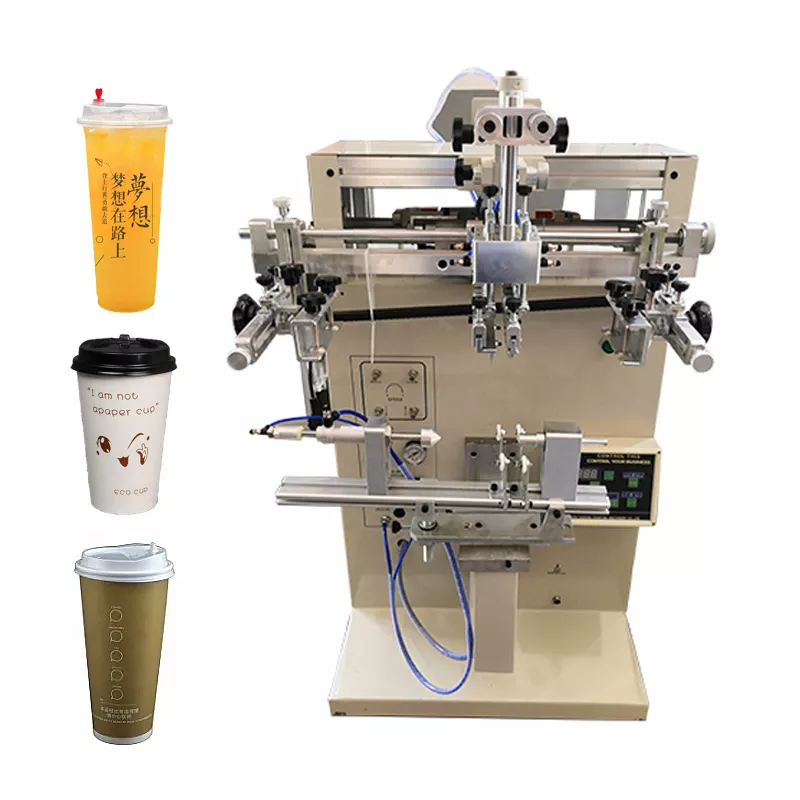
Semi-automatic cylindrical printing machine is suitable for surface printing on cylindrical objects and oval , such as syringe barrel, glass bottle, blow molded bottles, cosmetic tubes, aluminum water bottles, drum sticks, glass pipettes, gas cylinder, milk tea cups, jars etc.
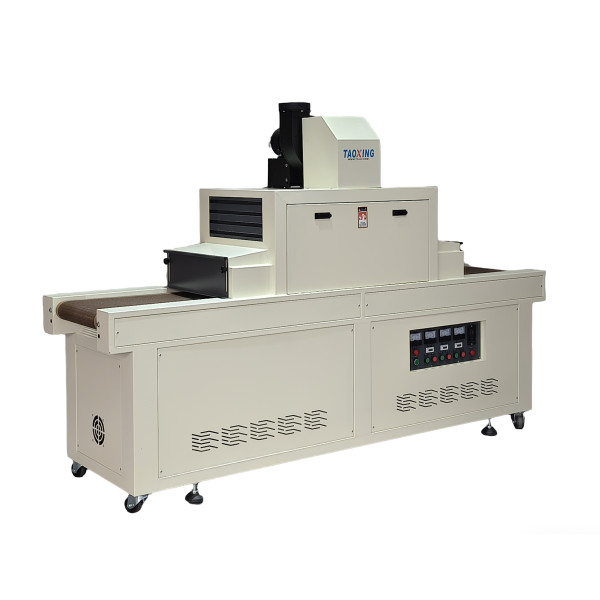
This UV curing machine is suitable for curing UV inks on medical supplies, mobile phone casings, membrane switches, electronic plastic casings, electronic components, LCD panels, terminal sealing, mobile phone component bonding, plastic component bonding, and LCDs.
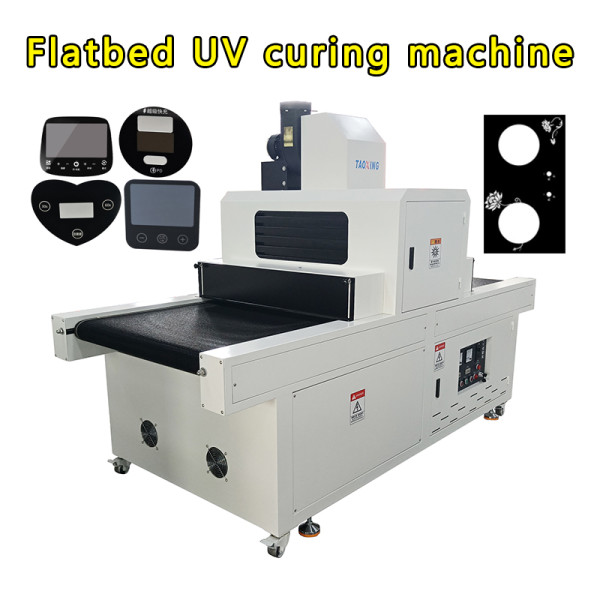
UV curing machine is mainly used for curing ink on printed products to improve the color fastness of the pattern.