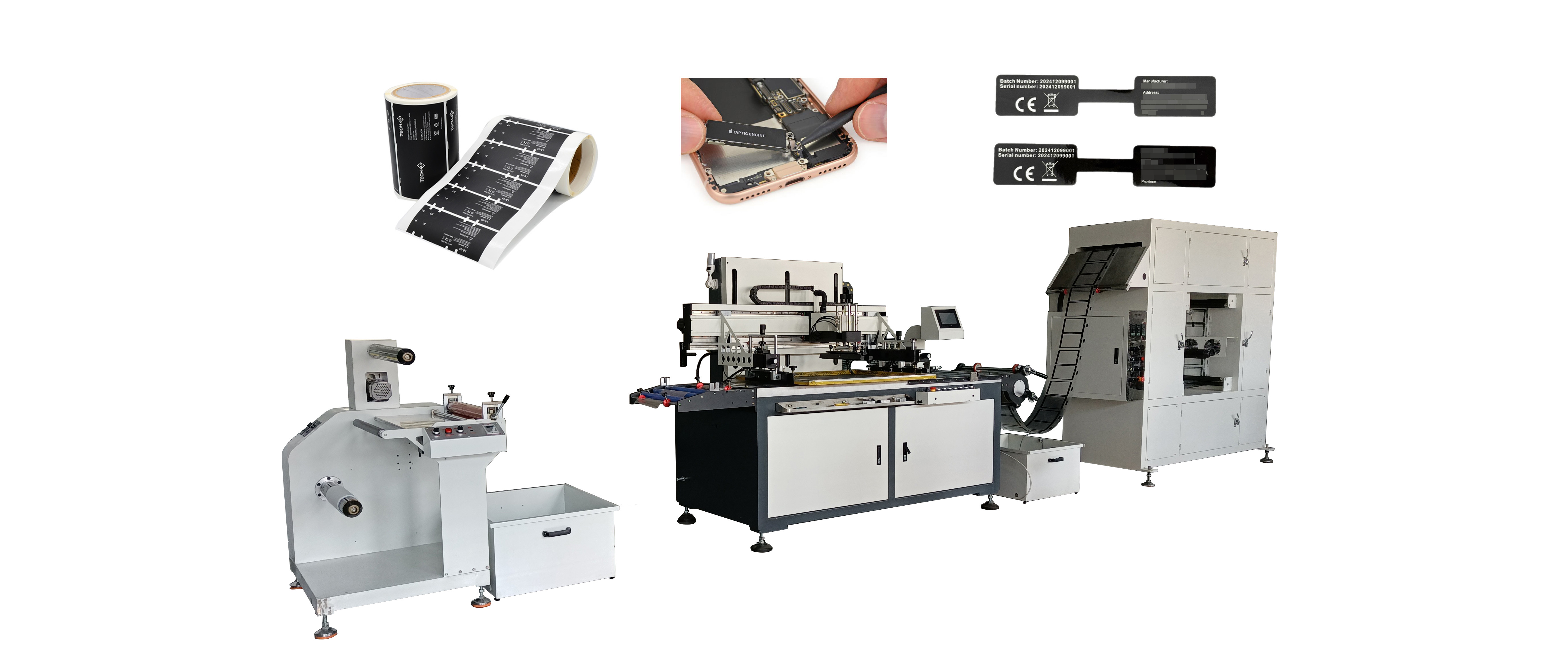
Application Case of Fully Automatic Roll-to-Roll Screen Printing Machine in Digital Accessory Label Printing
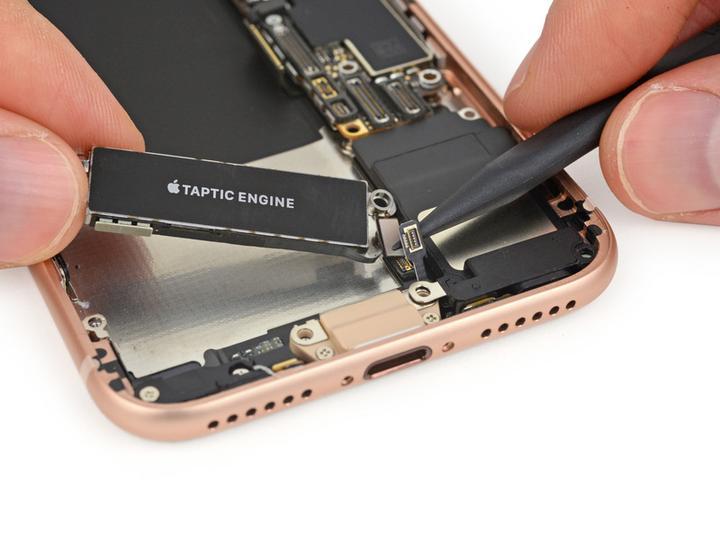
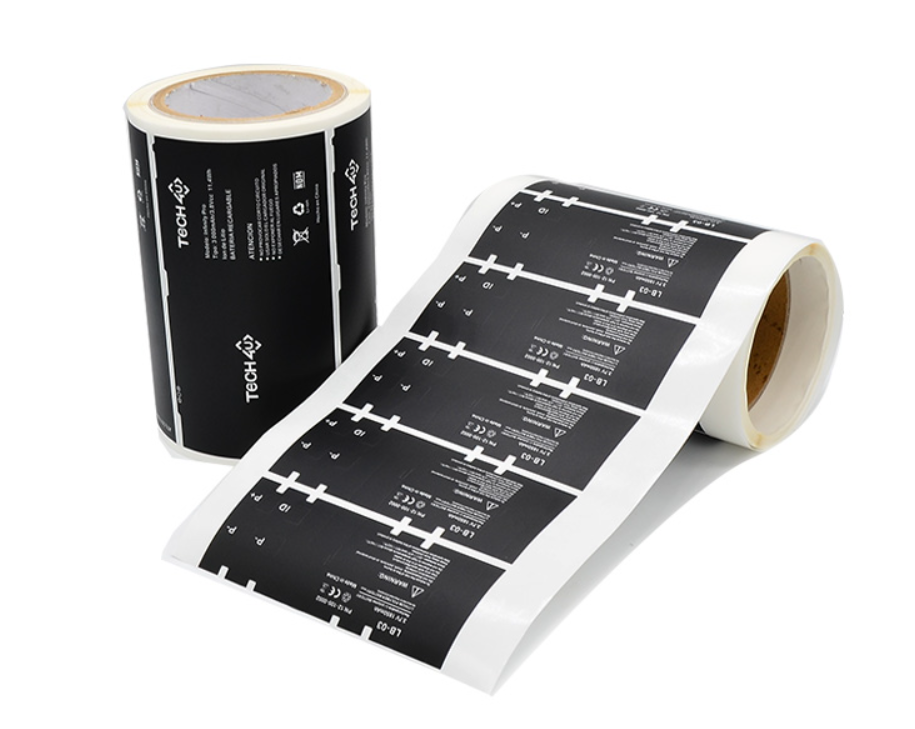
With the iterative upgrades of digital products, accessory labels are not only product identifiers but also serve functions such as brand display and parameter description, demanding increasingly stringent requirements for printing accuracy, efficiency, and consistency. Fully automatic roll-to-roll screen printing machines, with their advantages of continuous operation and high precision, are gradually replacing traditional manual and semi-automatic equipment, becoming the preferred solution for digital accessory label printing. This article, combined with actual production cases, details its key application points.
I.Introduction to screen printing process:
Screen printing, a type of stencil printing, is one of the four major modern printing methods, along with offset, letterpress, and gravure printing. Its principle involves using a squeegee to apply pressure, forcing ink through the mesh of the printing plate to transfer it to the substrate, creating a clear image. Roll-to-roll screen printing machines integrate continuous feeding, printing, drying, and rewinding of roll-to-roll substrates. They are compatible with PET and PVC roll-to-roll substrates commonly used in digital accessory labels, and feature thick ink layers, strong coverage, and wide adaptability, meeting the core requirements of labels for wear resistance, scratch resistance, and water resistance.
II.Challenges in label printing:
Digital accessory labels are mostly small-sized and high-precision designs, such as headphone and charger labels, with fine graphics and text containing tiny parameters; the substrate is mostly thin film material, which is easy to stretch and misalign, leading to misregistration; at the same time, different inks need to be compatible to ensure that the printed pattern is clear and has strong adhesion, and to avoid friction and peeling; in mass production, manual operation is prone to problems such as low efficiency, large errors and poor consistency, making it difficult to meet the needs of large-scale production.
III. Solution:
Employing a fully automatic roll-to-roll screen printing machine with a high-precision tension control system, it effectively prevents substrate stretching and misalignment, maintaining registration accuracy within ±0.05mm and solving the printing deviation problem for small-sized labels. Equipped with an intelligent drying system, it cures immediately after printing, improving ink adhesion and meeting the wear-resistant and waterproof requirements of digital accessory labels. Parameters are preset via a PLC control system, allowing for continuous printing with a single button start, significantly reducing manual intervention, improving production efficiency, and ensuring consistency across batches.
IV.Equipment operation procedures:
First, check all parts of the equipment to ensure that the screen is undamaged, the tension is uniform, and the ink is compatible. Second, install the label roll into the unwinding device and adjust the tension parameters. Then, preset the printing speed, squeegee pressure, drying temperature, and other parameters. Start the equipment, and the roll will be automatically fed, printed, dried, and finally rewound. After printing, turn off the equipment and clean the screen and ink residue.
V. Precautions:
Before printing, the label parameters must be checked, and the equipment tension and registration accuracy must be adjusted. The ink must be mixed as needed to avoid waste, and impurities must not be mixed in. During equipment operation, it is forbidden to touch moving parts to prevent safety accidents. During the printing process, the printing effect should be observed in real time, and parameters should be adjusted in time to avoid problems such as missing prints and ghosting. Avoid using sulfur- or phosphorus-containing items during operation to prevent abnormal ink curing.
VI.Equipment maintenance:
Before starting the machine each day, check the transmission components and add lubricating oil; regularly clean the screen , scraper, and drying device to prevent ink residue from clogging; check the tension control system and feeding mechanism weekly and adjust any loose parts in time; conduct a comprehensive test of the equipment circuit and control system monthly to ensure stable operation; when the machine is idle for a long time, clean the ink, turn off the power, and protect the equipment from dust.
In this case, after the equipment was put into use, the printing efficiency of digital accessory labels increased by more than 60%, the scrap rate dropped to less than 1%, and labor costs were significantly reduced. At the same time, it met the requirements of high precision and high consistency of labels, helping enterprises to improve product competitiveness. It is suitable for the large-scale production of labels for various digital accessories such as headphones, chargers, and data cables.