How to Choose the Right Screen Printing Drying & UV Curing Equipment
After the screen printing machine finishes printing the design, many people think the job is done. However, if the ink isn't completely dry, it will smudge easily, stick together when stacked, and the product will be returned by the customer. If the curing process isn't successful, all the previous machine setup, plate registration, and printing will be wasted. Today, we'll explain the three curing methods: hot air, IR infrared, and UV, to help you choose the right method for your product.
Why is curing the screen printing machine's hidden Achilles' heel?
The transformation of ink from a liquid state to one that is "not sticky to the touch and does not migrate when layered" relies on solvent evaporation or chemical reaction to form a film. Insufficient curing will result in a complete loss of adhesion, scratch resistance, and chemical resistance. When selecting a screen printing machine, curing capacity must be considered together with printing speed and ink type; looking at printing precision alone is insufficient.
Hot air drying: The most reliable "all-purpose" method
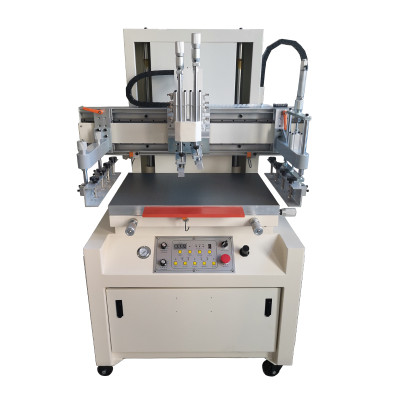
Hot air slowly blows away the solvent through circulation, making it compatible with almost all solvent-based inks and the least picky about materials. A flatbed screen printing machine equipped with a hot air drying tunnel can reliably dry bottles, panels, and nameplates. The disadvantages are that it takes up more space and consumes more energy, but its advantages are that it is durable and reliable, making it the most worry-free option for novice factories.
IR Infrared: Fast but Material-Specific
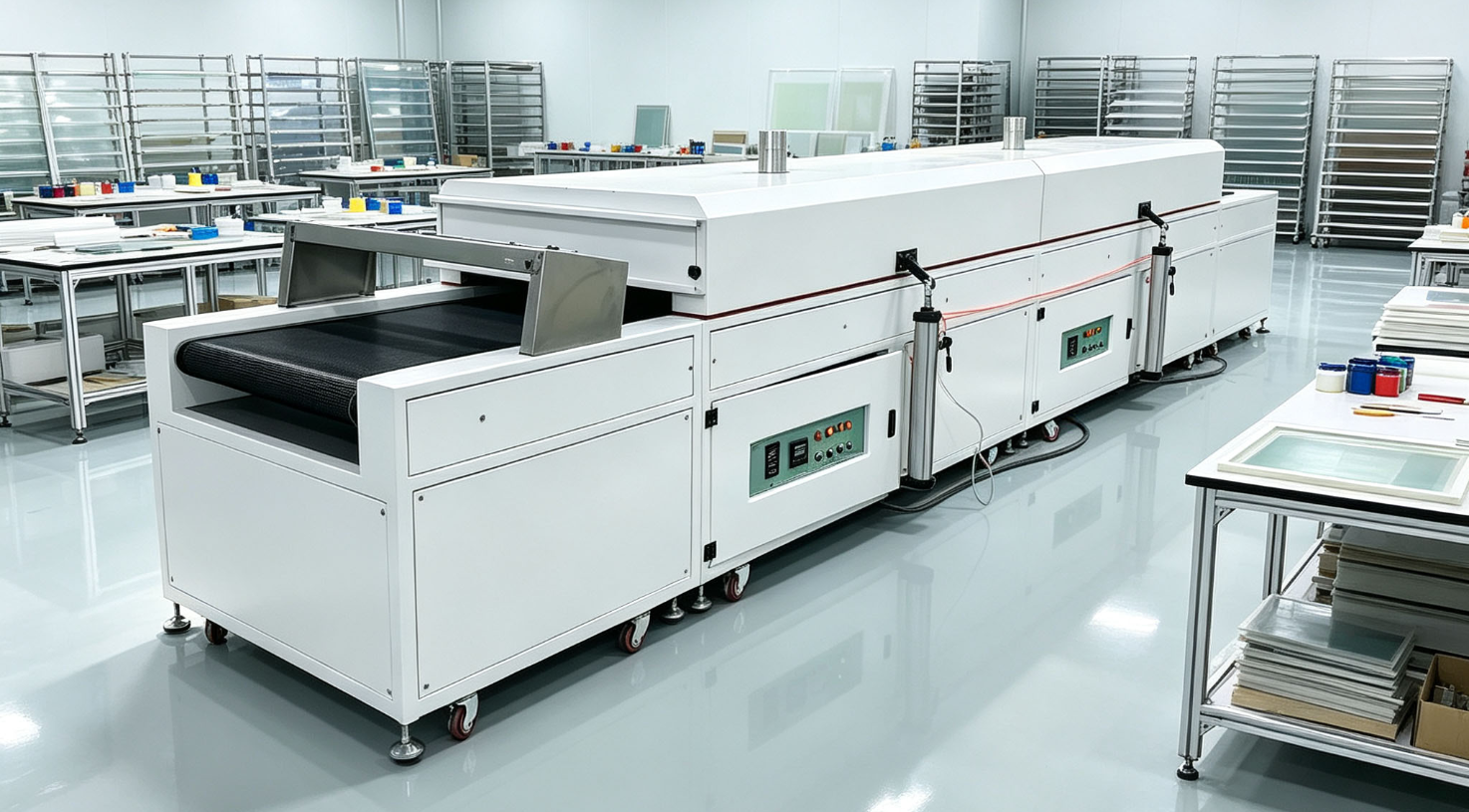
▲ Hot air/IR drying tunnel: rapid post-printing drying
Infrared radiation heats up quickly and has a short cycle time, making it suitable for high-volume production. However, heat-sensitive materials like plastics and films are easily deformed by the heat, so temperature and distance must be carefully controlled when using screen printing machines on curved surfaces to print on bottles and cans . IR is a "fast knife"—using it correctly doubles efficiency, while using it incorrectly can ruin an entire batch of material.
UV curing: Instant drying but requires special ink.
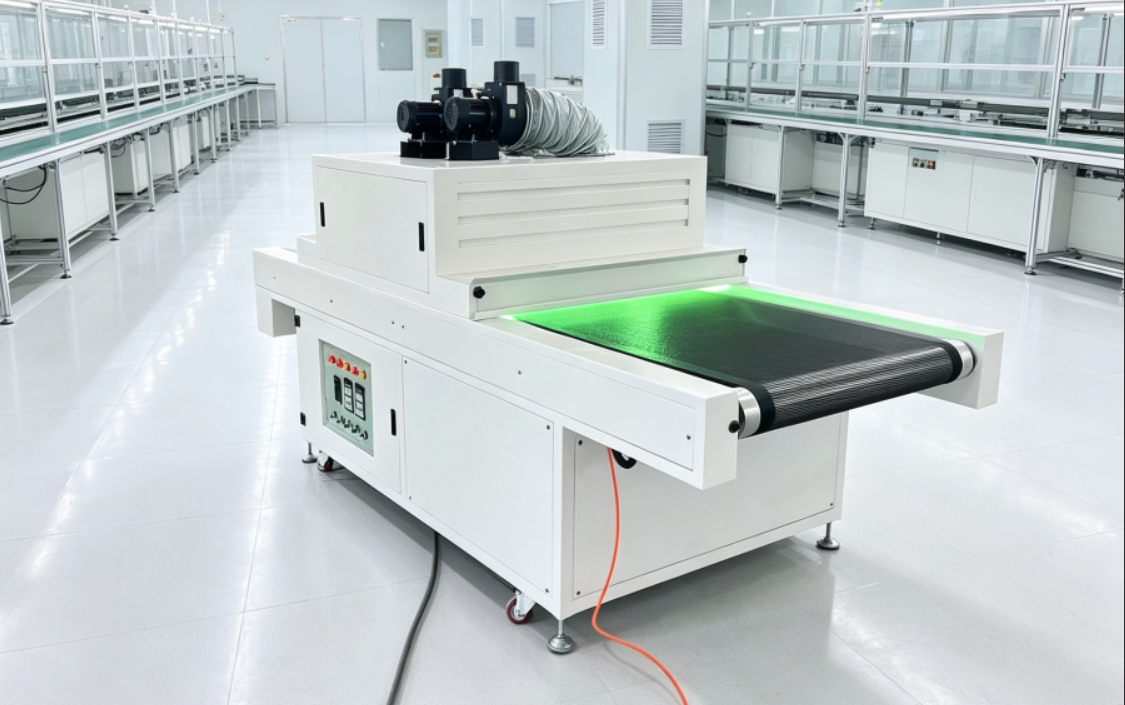
▲ UV curing station: Instant UV film formation
UV inks polymerize instantly with ultraviolet light, resulting in near-zero volatility, instant drying, and environmental friendliness, making them highly sought after in food and pharmaceutical packaging. However, they require specialized UV inks and have specific requirements regarding ink layer thickness and lamp attenuation. Improper pairing can lead to a drier surface and a sparser interior, eventually causing cracking.
How to set up the curing system for a flatbed screen printing machine?
For flat parts, use a flat conveyor line and a hot air drying tunnel for the most reliable drying. If you prioritize speed, use IR (Infrared) drying. If you require environmental protection and no residue, use UV drying. The key is to match the tunnel length with the line speed. Don't let printing be fast and curing be slow, causing a bottleneck at the entrance.
Curing of curved screen printing machines follows the arc.
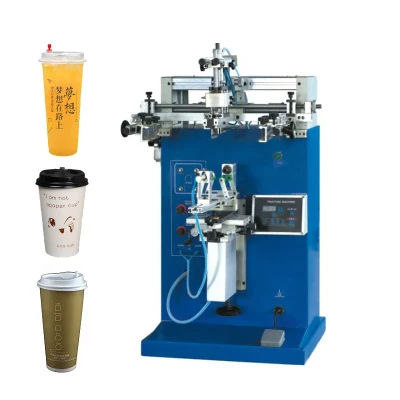
For curved surfaces like bottles and jars, after printing, the screen needs to rotate and enter the curing zone. Both IR and UV light sources must follow the curved surface, and the lamp spacing must be uniform. CooPrinter screen printing machines have incorporated a curved surface-following curing design on curved surface models to avoid uneven drying at the bottle mouth and bottom, which is crucial for batch consistency.
Curing rhythm of semi-automatic screen printing machine
Semi-automatic screen printing machines rely on manual loading and unloading, and curing is often done in offline small ovens or with IR lamps. The advantage is flexibility; changing products is straightforward. The challenge is that the cycle time is manually controlled, becoming a bottleneck once production volume increases. For small batches of multiple varieties, it offers the best cost-performance ratio.
Inline curing of fully automatic screen printing machineS
Fully automatic screen printing machines emphasize integrated printing and curing, with the curing section directly integrated into the production line, synchronizing speed with printing. Inline UV curing can maximize the entire line's cycle time, but the screen printing machine manufacturer must ensure the electrical control, transmission, and lighting controls are all functioning correctly; otherwise, a single glitch will halt the entire line.
Curing and matching design for CooPrinter screen printing machines
CooPrinter screen printing machines come with commonly used curing solutions as optional modules, including hot air, IR, and UV, all available according to the product. A curing parameter suggestion table is also provided to help customers avoid unnecessary detours. This reflects our years of experience as a screen printing machine manufacturer: selling machines is not the end goal; ensuring customers get stable printing and thorough drying is the true objective.
Four key points for choosing a screen printing machine manufacturer
When purchasing equipment, directly ask the manufacturer: ① Which curing method is most reliable for this screen printing machine? ② What is the adjustable range of the drying tunnel/lamp distance? ③ Do I need to modify the curing section when changing inks? ④ Do you have any curing sample reports from competitors? Asking these four questions will give you a clear understanding of the selection process.
In summary: Choosing the right curing agent is crucial to making all your previous efforts worthwhile.
Pre-press plate making and in-press squeegee operation are both important, but post-press curing is the final step. Stable hot air, fast IR, and clean UV coating—choose according to the material and production volume, and then have the screen printing machine manufacturer fine-tune the components. Only then will your screen printing machine truly run smoothly. Need a curing solution for prototyping? Feel free to contact CooPrinter Screen Printing Machines anytime.