How to Choose the Right Screen Printing Machine: Complete 2026 Buyer’s Guide
To choose the right screen printing machine, first confirm your product shape (flat/curved), daily output, printing precision, and material type. Use flat screen printers for flat items, curved screen printers for round bottles/tubes, semi-automatic for small batches, and fully automatic for mass production. Matching machine type to your real production needs ensures stability, efficiency, and cost savings.
1. Types of Screen Printing Machines & Their Uses
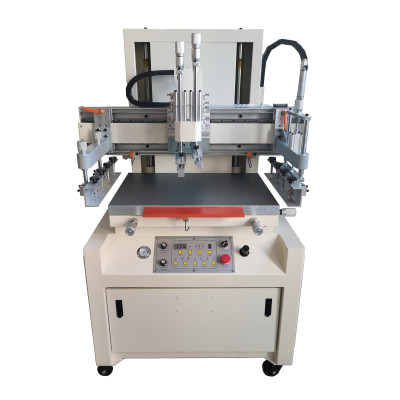
Flat Screen Printing Machine
Best for: glass, acrylic, metal sheets, PVC, paper, packaging, circuit boards, signsAdvantages: high precision, stable color registration, wide applicationIdeal for: flat surface printing, multi-color overprinting
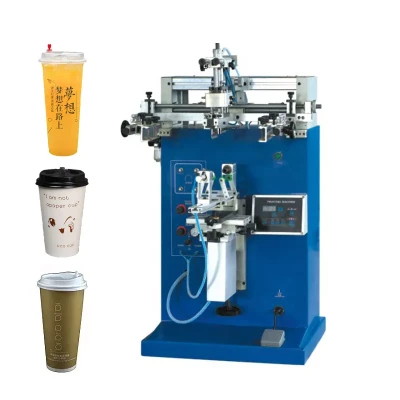
Curved Screen Printing Machine
Best for: plastic bottles, glass bottles, cups, tubes, candles, pistons, cosmetic containersAdvantages: 360° rotary printing, no distortion, consistent ink layerMust-use for: cylindrical, conical, arc surfaces
Semi-Automatic Screen Printing Machine
Best for: small-batch production, multi-style orders, sample makingAdvantages: low investment, easy operation, fast changeoverSuitable for: small factories, printing shops, start-ups
Fully Automatic Screen Printing Machine
Best for: mass production, assembly lines, high-volume ordersAdvantages: auto feeding, printing, curing, stacking; labor savingIdeal for: packaging lines, cosmetic bottles, automotive parts
Roll-to-Roll Screen Printing Machine
Best for: leather, non-woven fabric, film, wallpaper, soft packagingSpeed: up to 1000m/hHigh efficiency for: large-area flexible material printing
2. How to Select Step by Step
Step 1: Confirm product shape
·Flat products → Flat screen printer
·Round/curved products → Curved screen printer
Step 2: Confirm daily output
·<500 pieces/day → Semi-automatic
·500–3000 pieces/day → Semi-automatic with UV
·3000 pieces/day → Fully automatic line
Step 3: Confirm precision requirement
·Logos/text → Standard machine
·Fine lines, small text → Servo CCD alignment machine
·Thick ink/emboss → High-pressure thick film printer
Step 4: Confirm material & post-process
·Plastic → With flame treatment
·Glass/metal → With UV curing
·Packaging → With cold stamping + drying line
3. Key Factors You Must Check Before Buying
·Frame stability and rigidity
·Servo motor vs ordinary motor
·Printing accuracy (0.01mm level for high precision)
·Compatible size range
·After-sales: training, installation, maintenance
·Certification: CE, ISO, safety standard
4. FAQ
Q1: Can a flat screen printer print round bottles?
No. Flat screen printers only work for flat surfaces. Printing on curved items will cause misalignment, uneven ink, and pattern distortion. You must use a dedicated curved screen printer.
Q2: Which machine is best for beginners?
Semi-automatic flat screen printer is the best choice. It is easy to operate, low cost, quick to adjust, and suitable for samples and small-batch orders.
Q3: When should I choose a fully automatic screen printer?
When you have stable mass orders, need high efficiency, want to reduce labor, or run a continuous assembly line. It greatly improves output and reduces long-term cost.
Q4: What is CCD visual alignment used for?
CCD alignment provides high-precision positioning for multi-color overprinting, fine patterns, circuit boards, glass panels, and electronic components. It ensures registration error within 0.01mm.
Q5: How long does a screen printing machine last?
With proper maintenance, a high-quality screen printing machine can work 8–10 years. Regular maintenance of rails, blades, motors, and UV systems extends service life.
5. Conclusion
Choosing the right screen printing machine depends on product shape, output, precision, and material. Flat → flat machine; curved → curved machine; small batch → semi-automatic; mass production → fully automatic. Working with a professional manufacturer ensures stable performance, high efficiency, and long-term reliability.