Misregistration in multi-color screen printing? Six key points for troubleshooting misaligned images and ghosting.
The biggest problem in multi-color screen printing is misalignment of the second color with the first. The same screen printing machine works perfectly when printing a single color, but when printing multiple colors, issues like ghosting, white edges, and misaligned images appear. The misalignment worsens with each subsequent print run, potentially ruining an entire batch. Many operators immediately try to move the screen printing plate when they discover misregistration, only to make things worse. In reality, accurate registration depends 70% on plate making and positioning, and 30% on machine adjustment. By checking the following six points, multi-color registration can generally be kept within tolerance.
First, there is no unified standard for plate making, so it is inherently inaccurate.
Multicolor films must originate from the same file and share the same set of crosshairs; separate films for each color are not allowed. All color screens should ideally use the same frame size, mesh size, and similar tension (20-25 N/cm recommended), and be stretched and made under the same conditions. Inconsistent tension and screen deformation due to stress are common causes of misregistration during printing.
Second, the support for the strategic positioning is weakening, and the position of every item is changing.
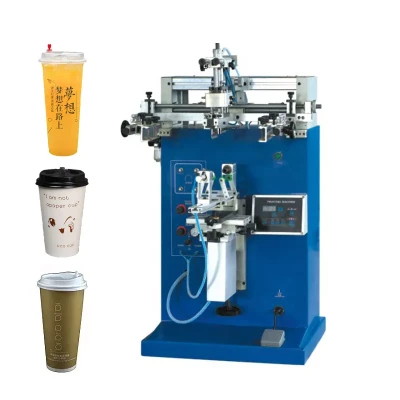
For flatbed screen printing machines, the backrest and positioning fixture must be locked and marked. Once the first piece is confirmed, they should not be moved. Films and sheets can be fixed using vacuum adsorption. For curved screen printing machines printing round bottles, the top and support rollers must be adjusted to ensure that the bottle does not move or slip when rotating. If the positioning is loosened, the color registration will naturally erratically move left and right (as shown in Figure 1).
3. Inconsistent screen spacing leads to deviations in screen rebound.
The screen spacing for each color should be maintained at 3-5 mm, and consistent at all four corners. Different screen spacings result in different instantaneous displacements of the screen as it peels off the substrate, causing the overprinting position to shift accordingly. After changing screens for a different color, first check the screen spacing at the four corners with a feeler gauge; do not rely solely on feel.
4. Excessive scraper pressure pushed the material out of place.
Excessive squeegee pressure or too small an angle will push the paper or film forward, causing the second color to be off-center; the printing speed for each color must also be kept consistent. Film-type substrates are affected by temperature and humidity, causing them to expand and contract; the workshop should strive to maintain constant temperature and humidity, materials should be brought in early for balancing, and the printing direction of each color should be standardized.
5. Printing the next color before the previous color is completely dry.
If the previous color is not sufficiently dry, it will cause smudging and displacement when printing the next color, and the substrate may shrink when heated. The printing process should follow the order of light to dark, fine lines to large areas. Sufficient drying time should be allowed for solvent-based inks, and each UV ink should be thoroughly cured. For multi-color overprinting, never skip the drying process to meet production targets.
VI. Relying solely on visual inspection, without verification or monitoring.
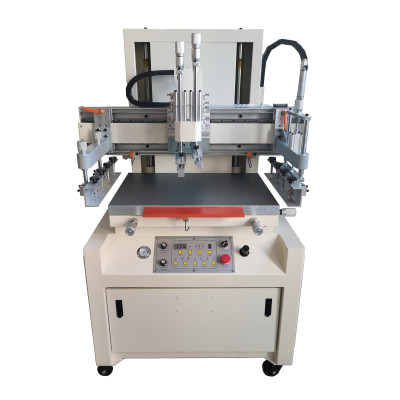
The correct procedure is to print the crosshair registration lines on the edge of the substrate, and calibrate the first piece using a magnifying glass or CCD. Registration deviation should be controlled within the customer's tolerance (generally ±0.1-0.2 mm). Fully automatic screen printing machines often come with CCD automatic registration, suitable for high-precision, high-volume production; semi-automatic screen printing machines rely on first-piece confirmation plus in-process inspection, with regular spot checks to promptly detect screen loosening and material drift (as shown in Figure 2).
Registration accuracy is a systemic issue determined by plate making, positioning, parameters, and monitoring. If deviations occur, the first step should be to return to the plate making reference and positioning fixture, rather than blindly moving the plate. Standardizing screen tension, positioning backing, screen distance pressure, and first-piece registration ensures that multi-color orders can be printed accurately and stably, regardless of whether it's a flatbed or curved screen printing machine. Even the most advanced screen printing machines require this set of standards as a safety net.