Screen Printing on Perfume Bottles: A Comprehensive Guide
Screen printing remains a dominant and highly valued decorative technique in the luxury perfume industry. It allows brands to apply intricate logos, elegant text, and sophisticated designs directly onto the often complex curves of glass bottles. This process delivers a durable, high-quality, and tactile finish that enhances the perceived value of the product.
I. Process Characteristics
The screen printing process for perfume bottles is distinguished by several key features:
Durability: The inks used are designed to be highly resistant to abrasion, alcohol, and fading, ensuring the design remains pristine throughout the product's lifecycle.
Versatility: It can be applied to various glass shapes and even other materials like acrylic or coated metal caps.
Tactile Quality: Unlike pure digital prints, screen printing deposits a visible layer of ink, creating a raised, tangible texture that signifies craftsmanship.
Excellent Opacity and Color Vibrancy: It is particularly effective for achieving solid, opaque coverage, especially with metallic or pearlized inks.
II. Required Machinery
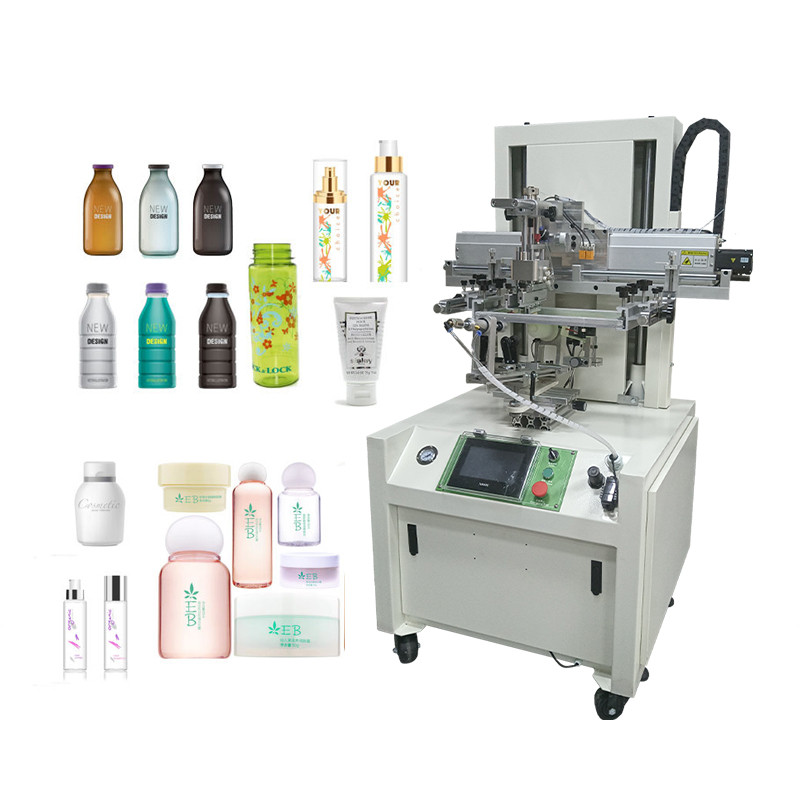
A semi-automatic or fully automatic screen printing line is essential for efficiency and consistency. The core machines include:
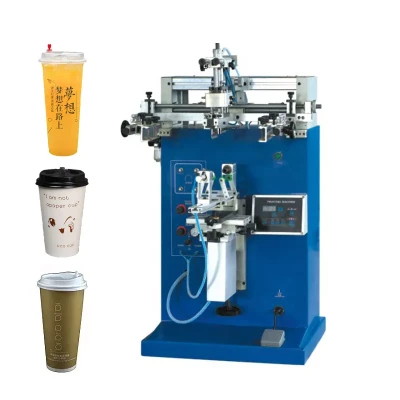
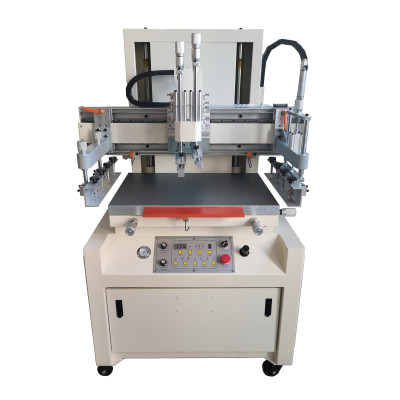
Screen Printing Machine: Features precision fixtures (jigs) that securely hold the perfume bottle in place. For round bottles, a rotating mechanism ensures seamless application around the circumference.
UV Curing Oven: A conveyor-based oven that instantly solidifies the UV-curable inks using intense ultraviolet light.
Screen Preparation Equipment: This includes a light table for aligning the film positive and an exposure unit to burn the stencil onto the screen.
Ink Mixing Station: An area for preparing and degassing inks to prevent air bubbles.
III. Operation Workflow
The process can be broken down into a series of meticulous steps:
1.Artwork & Screen Making: The design is separated into colors, and a film positive is created for each. A fine mesh screen, coated with a light-sensitive emulsion, is then exposed to UV light through this film. The exposed areas harden, while the unexposed areas (the design) are washed out, creating the stencil.
2.Bottle Preparation: Bottles are thoroughly cleaned using ionized air or lint-free cloths to remove any dust, grease, or static charge that could affect ink adhesion.
3.Machine Setup: The screen is mounted onto the machine, and the bottle-holding jigs are adjusted to the specific bottle contour. Ink viscosity is checked and adjusted if necessary.
4.Printing: The bottle is placed into the jig. The screen is lowered, and a squeegee floods then presses ink through the open areas of the stencil onto the bottle surface. For cylindrical bottles, the screen remains stationary while the bottle rotates.
5.Curing: The printed bottle is immediately transferred to the UV curing oven. The UV light triggers a photochemical reaction in the ink, hardening it within seconds to form a tough, durable film.
6. Quality Control & Packaging: Each bottle is inspected for defects like smudging, incomplete coverage, or misalignment before being carefully packaged.
IV. Key Considerations
Attention to detail is critical for a flawless outcome:
1.Ink Viscosity: Ink must be precisely mixed. If it's too thick, it won't transfer smoothly; if too thin, it will bleed and lose definition.
2.Screen Mesh Count: The mesh density must be chosen based on the design's detail. A higher mesh count is used for fine details, while a lower count is better for heavy ink deposits.
3.Squeegee Pressure and Angle: Consistent pressure and a correct angle are vital for a clean, uniform print.
4.Environmental Control: The printing area should be clean, temperature-controlled, and have low humidity to prevent contamination and ensure consistent ink behavior.
V. Machine Maintenance
Regular maintenance ensures longevity and print quality:
1. Daily: Clean the ink wells, squeegees, and flood bars with appropriate solvents. Wipe down the machine to remove any ink splatter or dust.
2. Weekly/Monthly: Lubricate all moving parts as per the manufacturer's guidelines. Check for wear on mechanical components and the UV lamp's intensity.
3. Screen Reclamation: After a production run, screens must be cleaned of ink and the emulsion must be stripped using chemical solutions, allowing them to be reused for new designs.
Summarize
In conclusion, screen printing is a sophisticated and reliable process that perfectly marries artistry with engineering. Its ability to create luxurious, long-lasting decoration makes it an indispensable technique for defining the iconic identity of a perfume bottle.