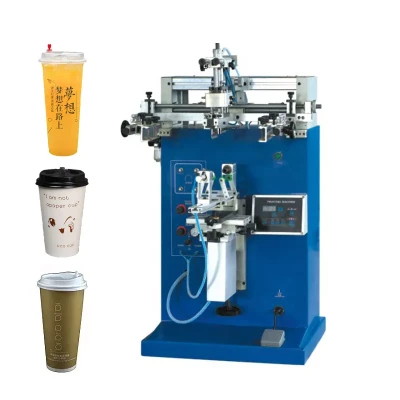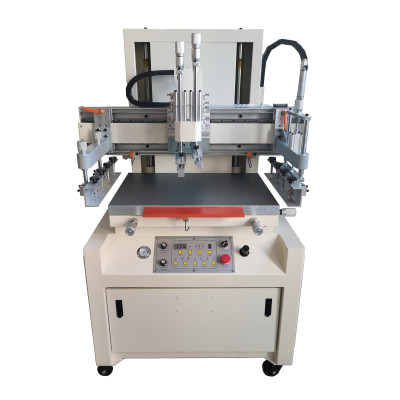
Screen printing on plastic and glass bottles: Detailed explanation of pre-printing treatment and post-printing curing processes
I. Pre-press treatment process: the key to ensuring ink adhesion
Plastics and glass typically have low surface energy, especially polyolefin plastics (such as PE and PP), which makes it difficult for inks to adhere firmly to their surfaces. The purpose of pre-press treatment is to improve the physical or chemical activity of the material surface, increase surface energy, and provide good "grip" for the ink.
1. Technological characteristics :
| Material | Frequently Asked Questions | Processing target |
| plastic bottles | Low surface energy, strong chemical inertness, and poor ink adhesion. | Improve surface energy and wettability through oxidation/activation. |
| glass bottle | The surface is smooth, dense, and non-porous, making it prone to mold release agents or stains. | Clean, degrease, and activate silanol groups if necessary. |
2. Required equipment and operating procedures :
A. Plastic bottle treatment (surface activation)
| Equipment Name | Features and principles | Operating procedures |
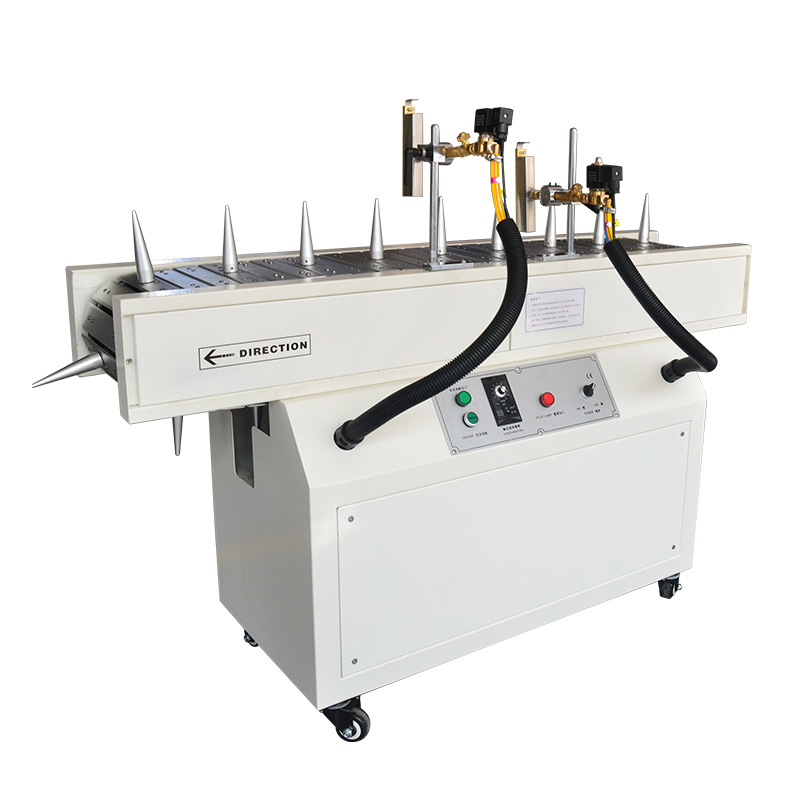
| Flame treatment machine | It utilizes a high-temperature flame to instantly oxidize the plastic surface, activating the polymer chains. This method is highly efficient.
Suitable for PE/PP bottles. | 1. Adjust the distance and contact time between the blue flame cone and the bottle surface.
2. The bottle rotates at a constant speed on the conveyor belt as it passes through the flame zone.
3. Control the processing temperature and time to avoid bottle deformation or over-burning. |
| Plasma treatment machine | Under vacuum or atmospheric pressure, plasma bombardment and etching are used togenerate free radicals and polar groups on the material surface. The process is uniform and suitable for complex shapes and a variety of plastics. | 1. Place the bottle into the plasma treatment chamber (or under an atmospheric pressure nozzle). 2. Inject an inert or reactive gas. 3. Apply high-frequency voltage to generate plasma.
4. Set the processing time, usually from a few seconds to tens of seconds. |
B. Glass bottle treatment (cleaning and degreasing)
The primary methods used are solvent wiping (such as isopropanol, ethanol, or specialized cleaning agents) or ultrasonic cleaning . The focus is on removing mold release agents, fingerprints, dust, or grease that may affect ink adhesion.
3. Precautions
Timeliness: The surface energy of plastic bottles treated with flame treatment or plasma treatment will gradually decline over time, so printing should be arranged as soon as possible.
Uniformity: Ensure that the bottle surface is treated evenly, otherwise it may lead to poor local printing or ink smudging.
Safety: When operating a flame treatment machine, pay attention to fire safety and ventilation.
II. Post-printing curing process: Enhancing product durability
Post-print curing is the process of converting liquid ink into a solid ink layer, allowing it to adhere firmly to the bottle surface and giving the printed material properties such as abrasion resistance and chemical corrosion resistance.
1. Technological characteristics
| Curing method | principle | Applicable ink types | Curing layer characteristics |
| thermosetting | Heating is used to evaporate the solvent, allowing the resin to cross-link and cure. | Solvent-based inks
thermoplastic inks | It is highly robust, but consumes a significant amount of energy.
May affect heat-sensitive materials |
| UV curing | The photosensitive resin (photoinitiator) is polymerized and cross-linked using ultraviolet light, resulting in rapid curing. | UV inks | UV curing is extremely fast, energy-efficient, and environmentally friendly. Suitable for heat-sensitive plastic and glass bottles. |
2. Required Equipment and Operating Procedures
A. UV curing treatment (recommended method)
| Equipment Name | Features and principles | Operating procedures |
| Circular UV Curing Machine | Using a high-intensity ultraviolet light source (mainly UV-A band), the printed bottles are exposed to UV light via a conveyor belt or rotating fixture to achieve instant curing of the ink. | 1.Preheating: Start the circular UV curing machine and wait for the UV lamps to reach a stable output intensity. 2. Parameter settings: Set the conveyor belt speed (affecting exposure time) and lamp power.
2.Curing: After printing, the bottles are passed through a UV curing machine, where UV light initiates the polymerization and curing of the ink.
4. Cooling: The surface temperature of the bottle may be high after curing, so it needs to be cooled naturally. |
B. Thermosetting treatment (for glass bottles or specific inks)
| Equipment Name | Features and principles | Operating procedures |
| Hot air drying oven /
Tunnel furnace | It provides a constant high-temperature environment to accelerate solvent evaporation and resin crosslinking in the ink. | 1.Set the oven temperature and baking time (according to the ink manufacturer's requirements).
2.The printed bottles are then placed in an oven/tunnel oven.
3. After curing, remove from the oven and allow to cool naturally. |
3. Precautions
UV Energy: UV curing must ensure sufficient UV radiation intensity (mW/cm²) and total energy (mJ/cm²) to achieve complete curing and avoid the situation of "dry surface, but not dry bottom".
Lamp maintenance: Regularly clean and replace the UV lamps of the circular UV curing machine to ensure light intensity.
Temperature control: During heat curing or UV curing of plastic bottles, the temperature must be strictly controlled to prevent deformation of the bottle body.
Light-blocking for UV curing machine: The UV light from UV curing machines is harmful to the human body. Protective equipment must be worn during operation, and the equipment must be properly shielded from light.


Summarize
of flame and plasma treatment machines in pre-press processing , as well as the application of rotary UV curing machines ( round bottle UV curing machines ) in post-press curing , is key to ensuring high-quality bottle printing production. Precise process control and equipment maintenance can enable your screen-printed products to achieve optimal adhesion and durability.