Unlocking the Beauty of Custom Shapes: Unveiling the Infinite Possibilities of Curved Screen Printing
I.What is curved screen printing?
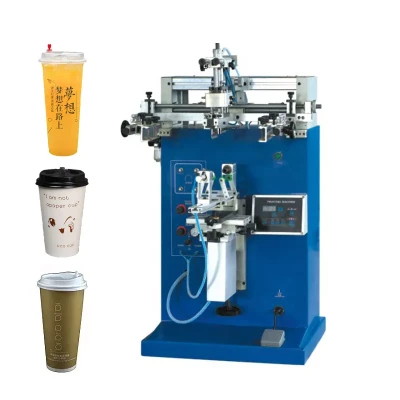
Curved surface screen printing is a special type of screen printing process. Unlike printing on flat surfaces such as paper or fabric, curved surface screen printing is specifically designed for substrates with irregular surfaces such as circles, ovals, and arcs.
Its working principle can be understood as follows: It typically uses a flat screen printing plate. When in contact with the substrate, the pressure of the squeegee causes the screen to elastically deform, thus forming a contact line (imprint line) with the curved surface. During printing, the squeegee remains relatively fixed, while the substrate (such as a cylindrical bottle) rotates synchronously with the horizontal movement of the printing plate. Ink is precisely transferred to the curved surface through the mesh. For products with a near-U-shaped single curved surface (such as lenses in some electronic products), a specially designed curved screen frame is even required to conform to its curvature to ensure uniform ink layer and prevent image distortion.
II. Why is the customization industry so fond of it?
For industries that require customized pattern printing, curved screen printing possesses an irreplaceable core competitive advantage:
1. Highly adaptable to irregularly shaped substrates
The customized market offers a wide variety of product forms: from ballpoint pens and thermos cups to handballs and irregularly shaped electronic product casings. Curved screen printing can overcome the challenge of traditional flat printing not being able to adhere to curved surfaces by adjusting screen tension, creating specialized fixtures, and selecting appropriate squeegee hardness. Whether the substrate is plastic, glass, metal, or ceramic, it can effortlessly achieve "laminated" printing.
2. Thick ink layer, rich colors, and durable.
Compared to digital printing or pad printing, curved screen printing can deposit thicker ink layers. This not only results in extremely high color saturation and opacity (especially when printing light-colored designs on dark substrates), but also gives the product superior durability. Labels printed on wine bottles or cosmetic bottles often need to be resistant to abrasion, solvent corrosion, and withstand the test of time. For example, when using special glazes on glass products and sintering them at high temperatures, the design can even fuse with the glass.
III. Balancing small-batch customization with industrial-scale mass production
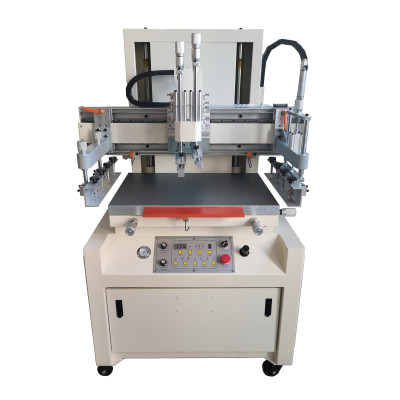
Screen printing offers exceptional flexibility. For the customization industry, it can meet the demand for small-batch, multi-variety personalized orders (such as high-end corporate gifts) while also enabling large-scale industrial production with fully automated equipment. Today, advanced curved-surface screen printing machines are even equipped with CCD vision positioning systems, capable of multi-color overprinting with micron-level precision, ensuring accurate alignment of logos and patterns even on curved surfaces.
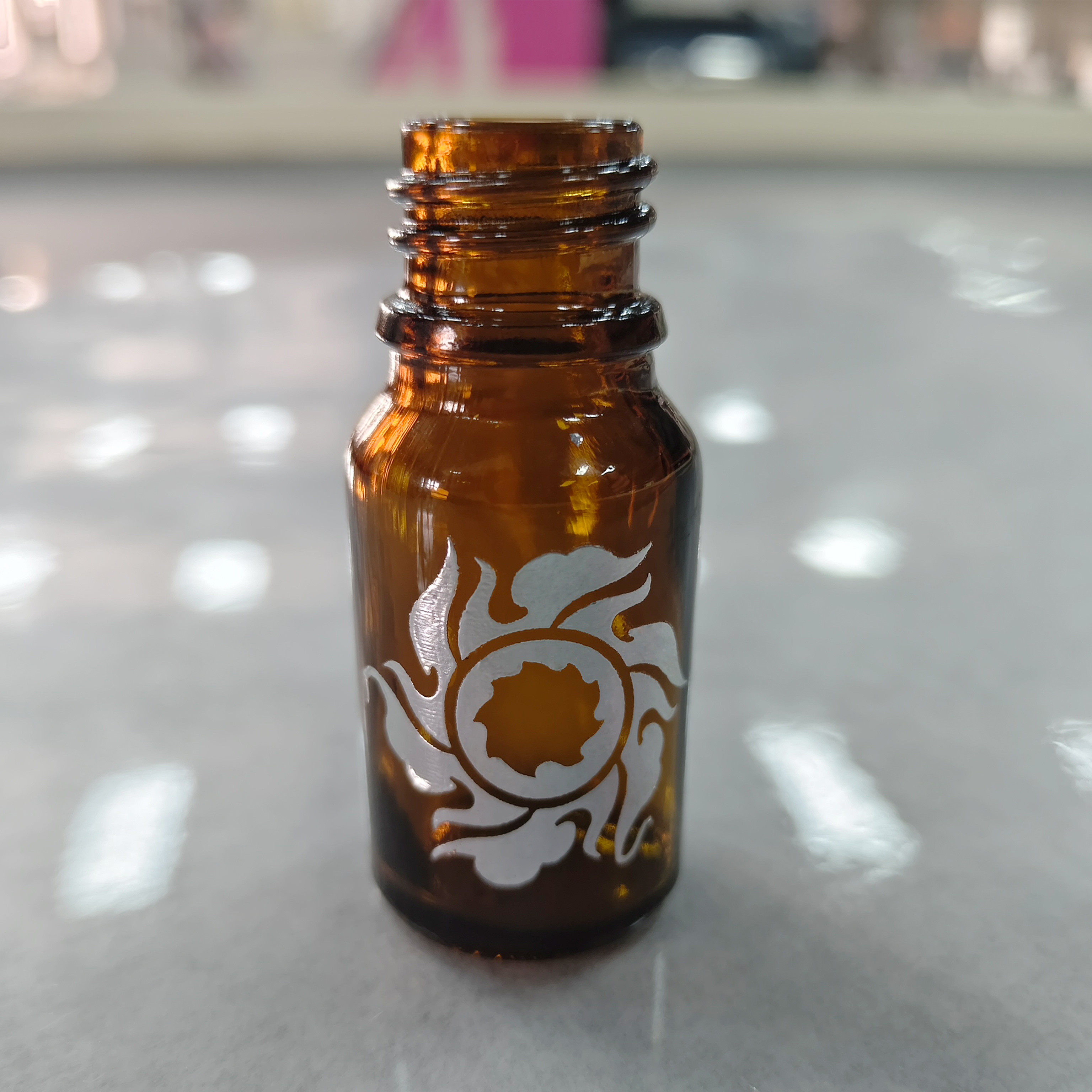
IV.Application scenarios: From lifestyle aesthetics to industrial hardcore
The next time you pick up a bottle of craft beer and look at the 3D gold-stamped label on the bottle, or when using a curved remote control and seeing the clear function symbols on the panel—these are all masterpieces of curved screen printing.
Daily chemical and food packaging: anti-counterfeiting labels and decorative patterns for shampoo bottles, cosmetic tubes, and wine bottles.
Consumer electronics: curved glass back panels for mobile phones, router antennas, and touch interfaces for smart water bottles.
Industrial and medical applications: Instrument panel markings and permanent markings on medical device housings, requiring resistance to high temperatures and chemical corrosion.
Conclusion.
In this era that values "curved beauty" and "differentiation," curved screen printing technology not only breaks free from the constraints of shape but also becomes a crucial medium for conveying brand value. It transforms ink into a finishing touch on the product, allowing customization to transcend flat surfaces and elegantly unfold with every curve of the product. If you're looking for a printing process that will make your product stand out from the competition, curved screen printing is undoubtedly a superior option worth exploring further.
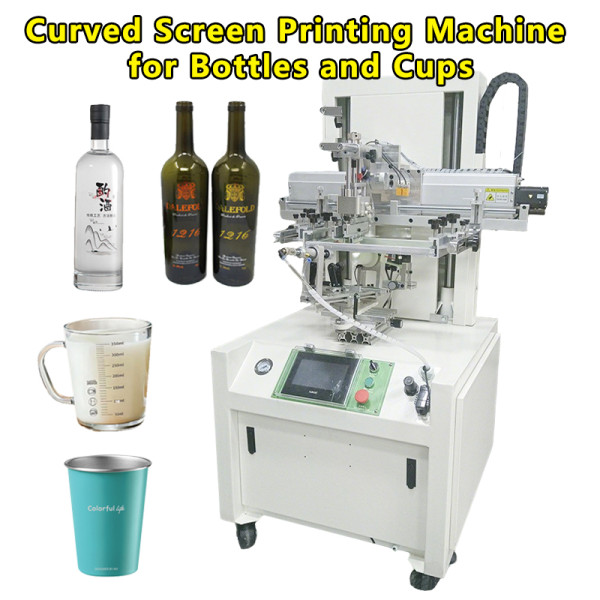
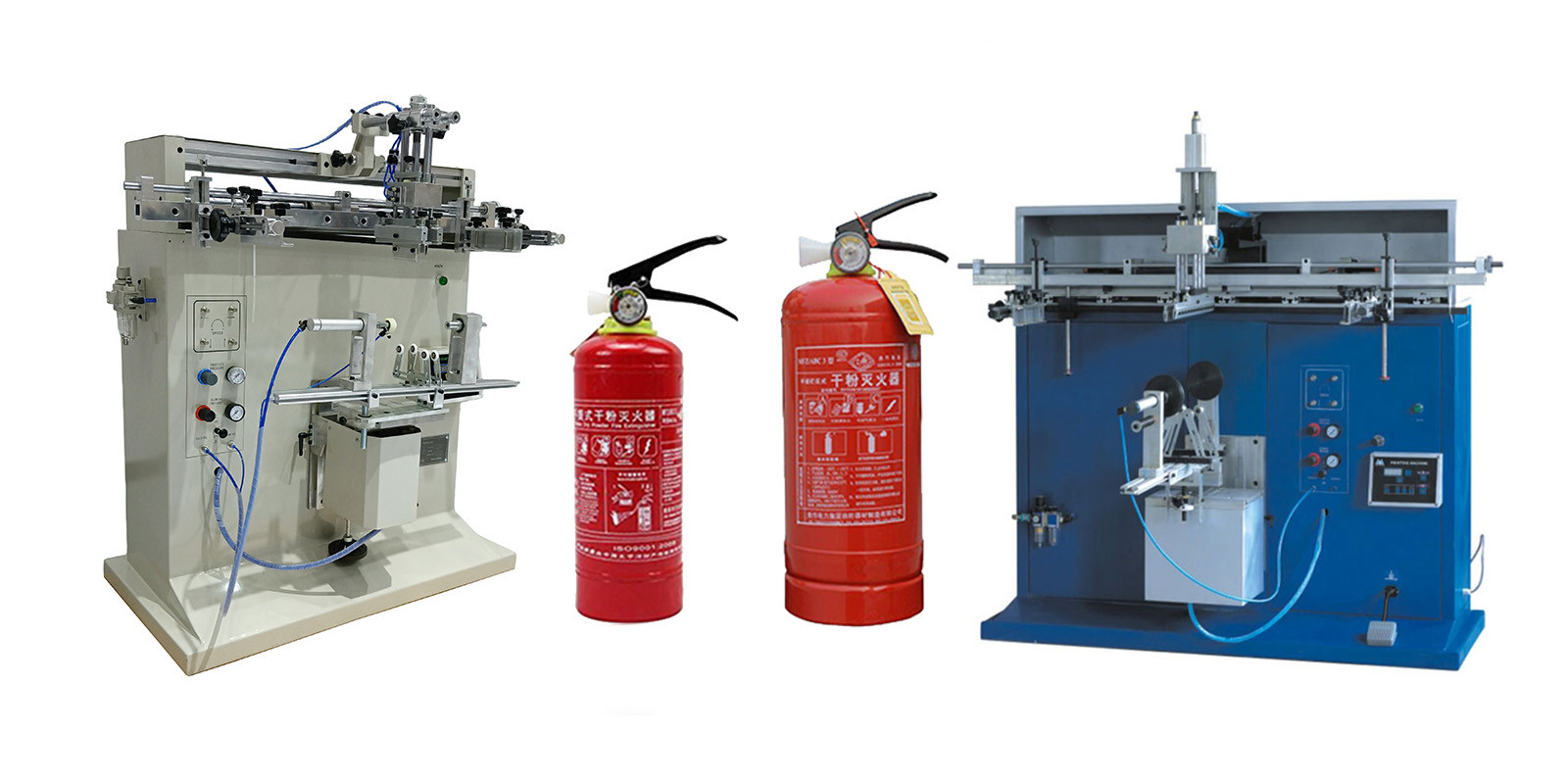
This servo curved screen printing machine is suitable for surface pattern printing of various round products.
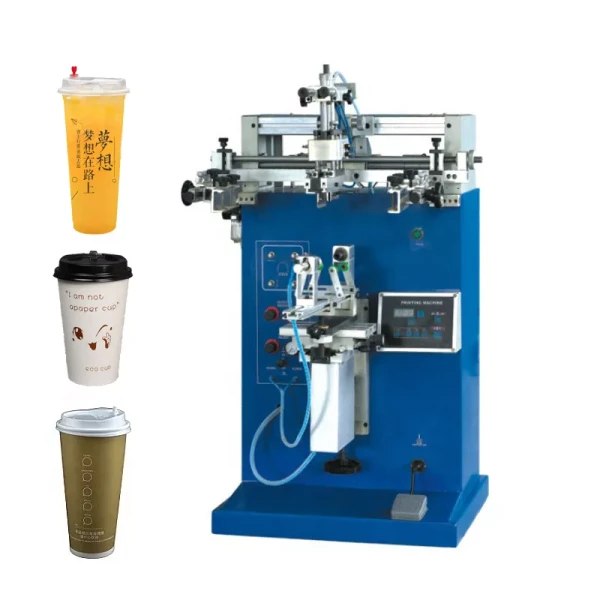
Semi-automatic cylindrical printing machine is suitable for surface printing on cylindrical objects and oval , such as syringe barrel, glass bottle, blow molded bottles, cosmetic tubes, aluminum water bottles, drum sticks, glass pipettes, gas cylinder, milk tea cups, jars etc.
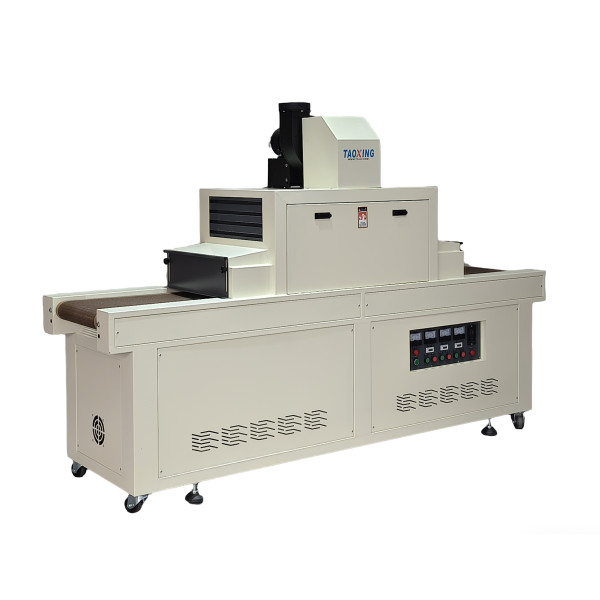
This UV curing machine is suitable for curing UV inks on medical supplies, mobile phone casings, membrane switches, electronic plastic casings, electronic components, LCD panels, terminal sealing, mobile phone component bonding, plastic component bonding, and LCDs.
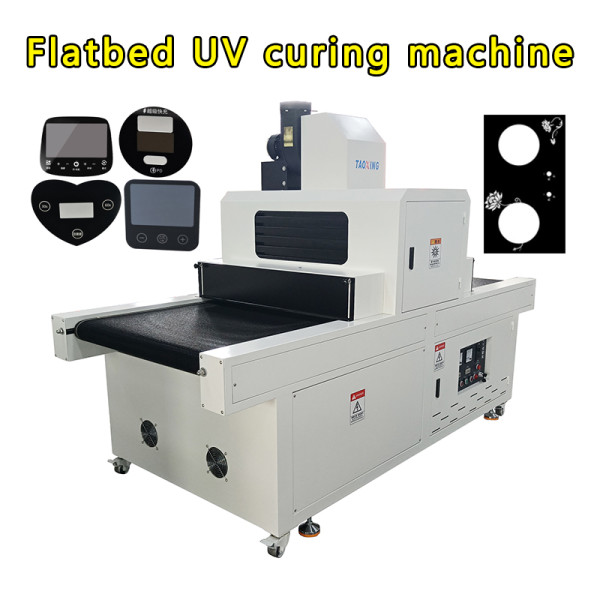
UV curing machine is mainly used for curing ink on printed products to improve the color fastness of the pattern.