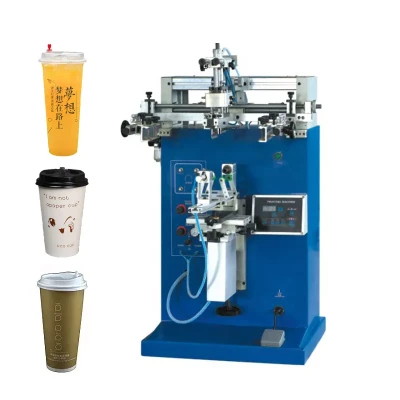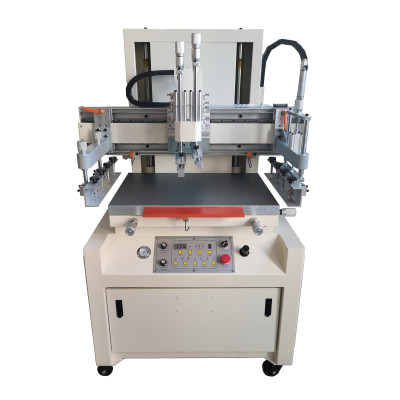
A perfect blend of precision and efficiency: How servo screen printing empowers intelligent automotive manufacturing.
I. Achieving micron-level printing precision
For automotive parts, markings are not merely decorative; they serve as a basis for traceability and installation. Take engine pistons as an example: the part numbers and installation arrows printed on their tops must remain clearly visible even under harsh conditions of high temperature, high pressure, and high-speed friction. Traditional printing methods struggle to guarantee consistency, while servo screen printing machines, driven by high-precision servo motors, can precisely control pressure and speed. For instance, when printing on pistons, the squeegee pressure (adjustable from 50-200N) and angle can be automatically adjusted according to the aluminum alloy or cast iron material, ensuring perfect ink adhesion while avoiding damage to the workpiece. Its repeatability can reach ±0.015mm, a crucial factor in ensuring stable mass production.
II. Intelligent closed-loop control reduces scrap rate
In traditional production, coating thickness often relies on the experience of skilled workers, resulting in low efficiency and significant quality fluctuations. The greatest convenience offered by servo screen printing machines lies in their integrated real-time monitoring and adaptive adjustment capabilities. By integrating a laser thickness sensor behind the printing station, the equipment can detect the thickness of the uncured coating 1000 times per second (with an accuracy of ±0.1μm). If the thickness exceeds the set range (e.g., 15μm ± 2μm), the control system automatically adjusts the squeegee pressure or speed within 0.5 seconds, forming a closed-loop production process of "printing-monitoring-feedback." This intelligent quality control, after being implemented at an engine manufacturing plant, reduced the coating thickness deviation rate from the traditional 8% to 1.2%, significantly minimizing scrap losses.
III. Flexible manufacturing to meet the challenges of complex curved surfaces
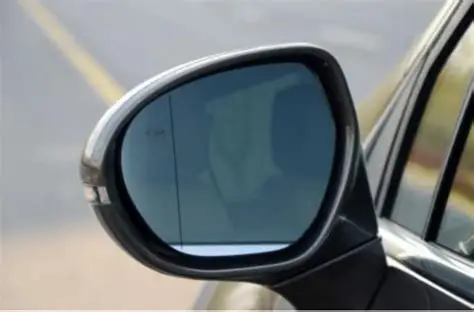
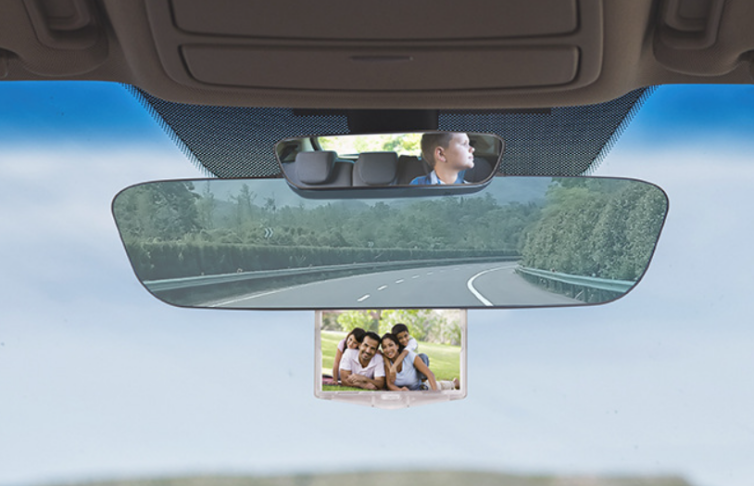
As automotive design becomes increasingly complex, irregularly shaped components such as curved glass and AR-HUD displays are emerging trends. The advantages of servo drives are clearly evident here: a six-axis robotic screen printing machine, combined with a vision positioning system, can easily handle the printing challenges of curved glass. Compared to the ±0.1mm alignment accuracy of traditional equipment, the servo screen printing machine, guided by vision, can achieve an alignment accuracy of ±0.03mm, while reducing the printing time for a single piece of glass to less than 15 seconds, increasing production efficiency by 40%. Furthermore, by controlling the vertical lifting and printing stroke of the screen with servo motors, the equipment can quickly adapt to different sizes of fairings or dashboards, significantly reducing the intensity of manual mold adjustments and truly achieving one-click changeover.
V.High-efficiency integration, reshaping the production cycle
In automotive parts production lines that prioritize maximum efficiency, servo screen printing machines typically employ a multi-station rotary table design, integrating automatic feeding, printing, drying, and unloading functions. The equipment's high-speed response capability easily enables a mechanical production capacity exceeding 850 cycles per hour. By using fully electric servo drives instead of traditional pneumatic components, the operation is not only smoother and quieter, but also significantly reduces energy consumption and maintenance costs.
Conclusion.
In conclusion, servo screen printing technology, with its high precision, intelligence, and flexibility, has long transcended the scope of a simple marking tool. It not only ensures the traceability and quality of automotive parts but also provides reliable manufacturing support for the intelligent cockpit and lightweight design of new energy vehicles, making it an indispensable part of modern automotive intelligent manufacturing.
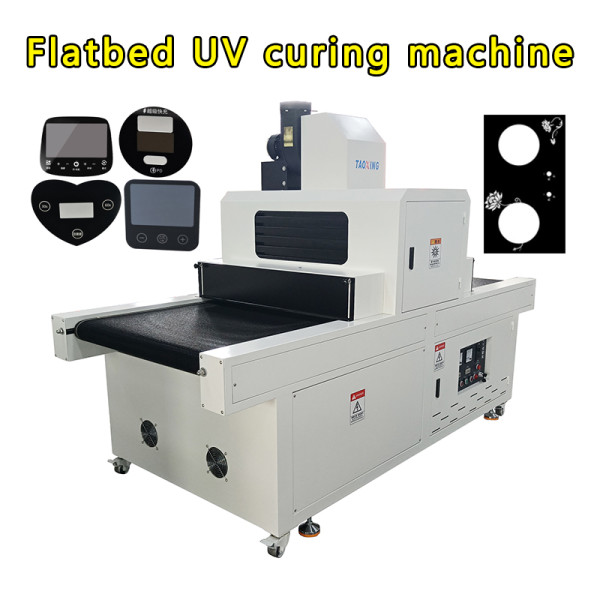
UV curing machine is mainly used for curing ink on printed products to improve the color fastness of the pattern.
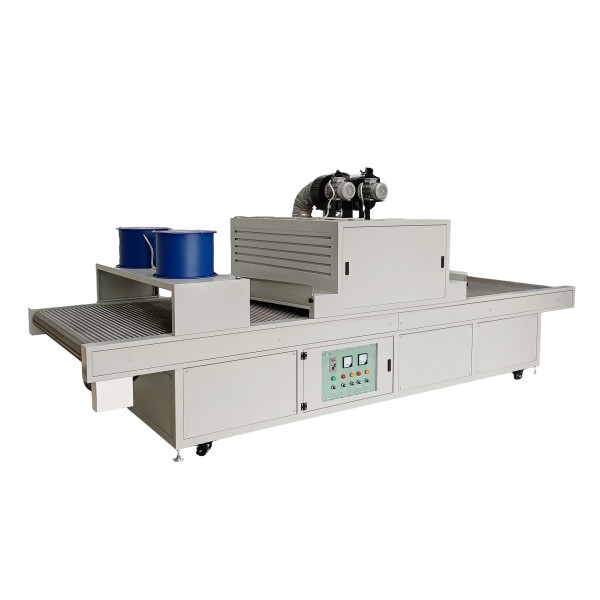
Taoxing Technology's large-format flatbed UV curing machine with high-power UV lamps enables uniform large-area irradiation, fast curing, low thermal damage. Equipped with intelligent dimming & efficient heat dissipation, it has flexible parameters for diverse processes, stable and easy to operate. Suitable for glass, metal, acrylic, etc., widely used in advertising, building materials, electronics, auto parts, printing & packaging for curing inks, coatings, adhesives, meeting industrial mass production needs.
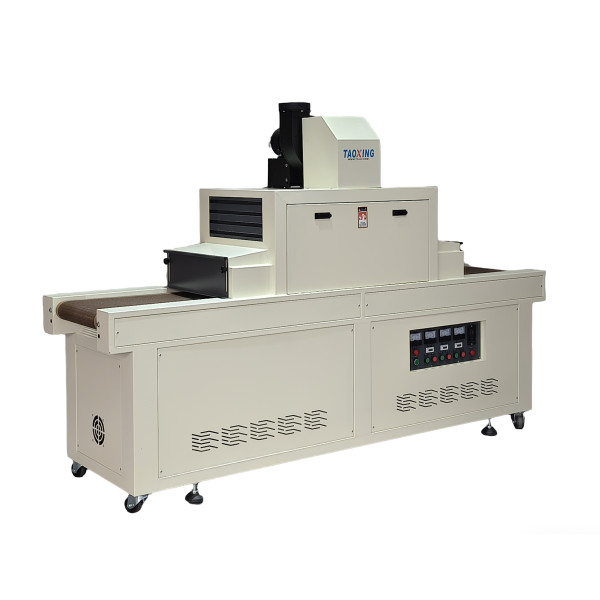
This UV curing machine is suitable for curing UV inks on medical supplies, mobile phone casings, membrane switches, electronic plastic casings, electronic components, LCD panels, terminal sealing, mobile phone component bonding, plastic component bonding, and LCDs.
UV curing machine is mainly used for curing ink on printed products to improve the color fastness of the pattern.