How to screen print on glass panels and what are the key considerations?
Screen printing on glass requires specialized glass-compatible inks containing adhesion promoters, thorough surface cleaning with isopropyl alcohol, and often post-printing thermal tempering at 600-700 degrees Celsius to permanently bond the ink. Key considerations include ink selection (organic vs ceramic), curing method, and whether the glass will be tempered after printing. CooPrinter's machines handle glass panels for automotive, architectural, and electronic applications.
Detailed Explanation
Ink selection is the first critical decision. Organic (two-component) glass inks bond chemically to the glass surface and cure at room temperature or with UV light, suitable for non-tempered applications. Ceramic (enamel) inks contain glass frit that fuses with the glass surface during tempering at 600-700 degrees Celsius, creating a permanent bond that cannot be scratched off. CooPrinter supports both ink systems with appropriate screen mesh and squeegee configurations.
Surface preparation is essential for adhesion. Glass must be cleaned with isopropyl alcohol or specialized glass cleaner to remove oils, dust, and manufacturing residues. Some applications require primer coating to promote adhesion. The printing environment should be dust-free, as any particles between the ink and glass create visible defects. CooPrinter recommends maintaining 20-25 degrees Celsius and 50-60% relative humidity for optimal ink performance.
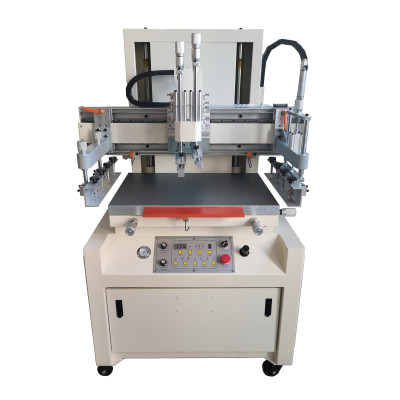
Applications and market context include automotive dashboards and infiliators, architectural glass panels, appliance control panels, touch screen covers, and solar panels. CooPrinter's flat screen printing machines with servo lifting platforms handle glass sizes up to 600x900mm with CCD registration for multi-color precision. The global screen printing market, growing at 3.60% CAGR toward $10.23 billion by 2034, sees strong demand from the glass sector. CooPrinter's 10,000+ installed units include numerous glass printing applications worldwide.
Key Points
Ink Selection
Organic inks for non-tempered glass; ceramic inks for tempered (permanent) applications.
Surface Preparation
Clean with IPA, remove all oils and dust. Consider primer for challenging substrates.
Tempering Bond
Ceramic ink fuses with glass at 600-700C during tempering for permanent adhesion.
Related Questions
- What materials can be screen printed on?
- What is CCD registration in screen printing and why is it important?
- How to select screen printing equipment for automotive parts?
Are you looking for a reliable precision screen printing machine manufacture?
We can quickly provide customers with market analysis, technical support and customized services.