How does UV curing work in screen printing?
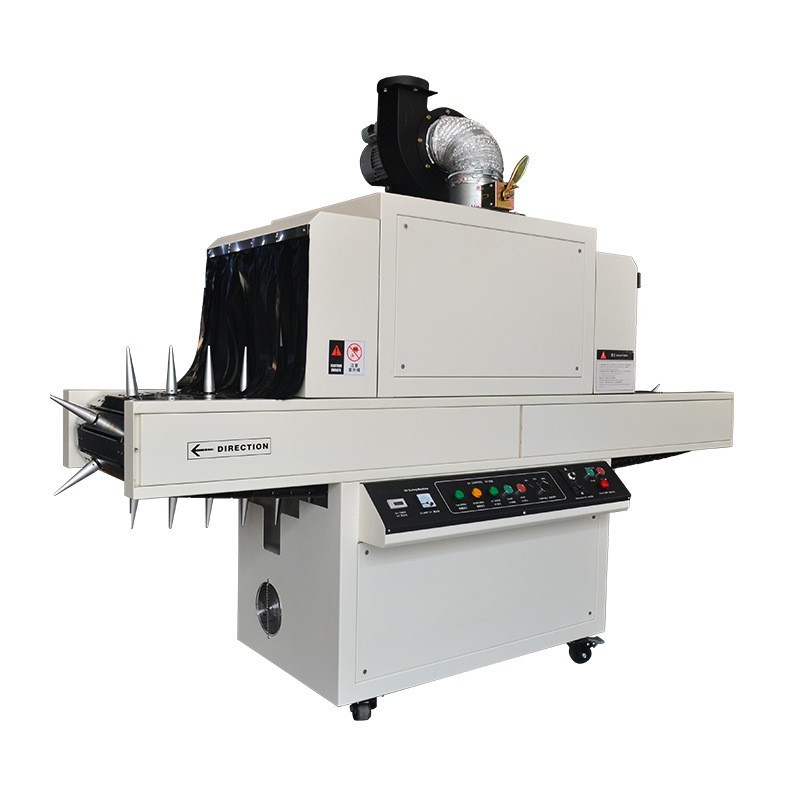
UV curing in screen printing uses high-intensity ultraviolet (UV) light to instantly polymerize photoreactive compounds in UV-curable inks. When UV light hits the ink, photoinitiators trigger a chemical reaction that cross-links the ink polymers within seconds, creating a hard, durable print surface without the need for solvent evaporation. The UV curing process relies on photoinitiators mixed into the ink formulation. These compounds absorb UV energy (typically at 200-400nm wavelength) and generate free radicals that initiate polymerization. The ink transforms from liquid to solid in 0.5-3 seconds, compared to 10-30 minutes for conventional solvent-based inks. This dramatic speed difference enables inline production where printing and curing happen in a single pass. UV curing offers several advantages: near-zero VOC emissions, lower energy consumption (no need to evaporate solvents), superior ink adhesion, and excellent chemical resistance. CooPrinter's automatic screen printing lines integrate UV curing stations with conveyor systems, achieving throughput of 300-500 prints per hour while maintaining consistent cure quality across different substrates. The electronics sector, which accounts for 38.5% of China's screen printing market, relies heavily on UV-cured screen printing for circuit boards, membrane switches, and precision components. UV curing enables fine-line printing with sharp edges because the ink does not spread before curing. CooPrinter has delivered over 10,000 units globally, many equipped with integrated UV curing systems for electronics and packaging applications. UV ink cures in 0.5-3 seconds vs 10-30 minutes for solvent-based inks. Near-zero VOC emissions and lower energy consumption than thermal drying. Cross-linked polymers provide excellent chemical and abrasion resistance.Detailed Explanation
Key Points
Instant Curing
Eco-Friendly
Superior Durability
Related Questions
Get a Free Quote
Are you looking for a reliable precision screen printing machine manufacture?
We can quickly provide customers with market analysis, technical support and customized services.